



When Extreme Tiredness Is Actually Burnout
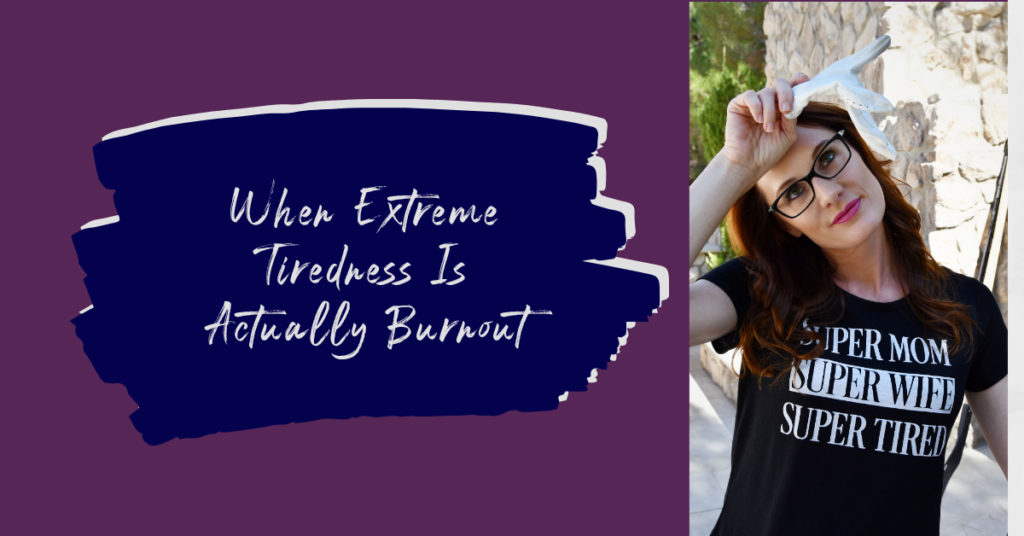
I have been tired lately.
Not “I had an unusually packed day and skipped lunch” tired. Not “I need a second cup of coffee to get through the afternoon” tired. I mean deeply, persistently, why-do-my-limbs-feel-like-they’re-filled-with-concrete and why-do-my-eyelids-feel-like-teeny-tiny-weights-are-pulling-them-down tired.
Naturally, as a middle-aged woman (a fact my birth certificate confirms but my brain continues to dispute), my first instinct was to consider every possible biological explanation. Was it my thyroid? My hormones? Was I deficient in iron, vitamin D, magnesium, or B12? I did not have a precise answer. I just knew I did not feel like myself. Then, during one of my guided meditations on Insight Timer, the app suggested content related to burnout.
Burnout? At first, I almost dismissed it. Burnout sounded dramatic. After all, I was functioning, working, and getting things done. I was still capable, productive, and generally holding the pieces of my life together. Absolutely no one would look at me and think she’s burned out. But after thinking long and hard about it, I realized burnout did not just seem possible. It seemed obvious.
In the past two years, I have moved two times. I have lived on the East Coast and West Coast simultaneously, with my belongings split between both. I have signed two apartment leases and recreated life in two different cities which meant setting up utilities, services, accounts, paperwork, maintenance, and all the invisible tasks involved in making a property function… times two. That’s a lot of logistics to manage at the same time.
New doctors. New gyms. New favorite coffee shops. New grocery stores. New routes. New routines. New bills to pay. New friendships. New everything.
Apparently, “CEO of your life” can sometimes look less like strategic leadership and more like being the unpaid operations manager for multiple households. None of these responsibilities, individually, seemed impossible. That was part of the problem.
Each time I was handling one enormous project, another landed on top of it before the first one had finished. I kept shuffling them because I am strong and capable. Successful people become very good at managing difficult things. We solve problems, organize chaos, and keep moving. But capability does not make us immune to exhaustion.
Morning journaling helped. Guided meditations helped. Quiet moments helped. But self-care cannot always cancel out an unsustainable level of responsibility. You cannot meditate your way around the fact that your nervous system has been operating like an emergency command center for two years. Burnout is not always a dramatic collapse. Sometimes it is a slow dimming.
You may still show up, meet deadlines, answer emails, manage your business, and take care of everyone around you. But everything requires more effort. Decisions feel heavier. Small inconveniences feel enormous. Rest does not feel restorative. You are tired after sleeping, tired after the weekend, and somehow tired before the day begins.
For high-achieving professionals and entrepreneurs, burnout can be difficult to recognize because we are accustomed to pushing through discomfort. We often interpret exhaustion as a personal efficiency problem.
Maybe I need a better morning routine.
Maybe I need to go to sleep earlier so I can wake up earlier.
Maybe I need a new productivity system, a standing desk, and an app that sends increasingly aggressive reminders to drink water.
Sometimes, however, the solution is not to optimize your schedule. It is to admit that too much has been placed on it. Becoming the CEO of your life means recognizing that your energy is not an unlimited corporate resource. It requires leadership, prioritization, boundaries, recovery, and occasionally shutting down a few nonessential departments.
It also means taking persistent fatigue seriously. Burnout may be part of the explanation, but unexplained or worsening exhaustion is still worth discussing with a qualified healthcare professional. Self-awareness and medical care are not competitors. You are allowed to pursue both.
So, what can you do when burnout has arrived, unpacked its bags, and started forwarding its mail to your address?
The Burnout Recovery Power List
- Reduce the open loops. List everything pulling at your attention and decide what can be completed, delegated, delayed, or dropped.
- Stop treating rest as a reward. Sleep, recovery, and quiet time are basic operating requirements.
- Create a temporary “not now” list. Some opportunities may be excellent but still poorly timed.
- Delegate before you feel desperate. Ask for help with tasks that do not require your personal involvement.
- Protect small pockets of peace. Continue journaling, meditation, walking, reading, or sitting quietly without turning relaxation into another performance goal.
- Reevaluate your standards. Not everything needs to be done perfectly, immediately, or personally.
- Schedule recovery time. Put it on the calendar before other people fill the space.
- Reconnect with what restores you. Spend time with people, places, hobbies, and routines that make you feel like yourself.
- Talk to a professional when needed. A physician, therapist, or coach may help you rule out medical concerns and develop a realistic recovery plan.
You do not need to wait until you completely fall apart to make changes. Sometimes the strongest, most strategic thing a successful woman can do is admit that she is tired, take herself seriously, and begin leading her life differently.
Enjoyed this article? Subscribe to my Be the CEO of Your Life Newsletter to receive my blog articles and other resources to connect, inspire, and motivate you to get everything you want out of life!

Found this article inspiring? Please share it!…